
Cozy, beginner-friendly recipes for a full and happy holiday table
Thanksgiving is really about the table: a crowded one, with a few extra chairs pulled in, serving dishes passed hand to hand, and someone always reaching for seconds. The turkey gets the spotlight, but ask most people what they look forward to and they’ll name a side dish. The mashed potatoes. The stuffing. The cranberry sauce that has to come from a particular recipe.
That’s why sides matter so much. They fill the plate with color, texture, and flavor, and they make a meal feel generous. A good spread has something creamy, something crisp, something sweet, something savory, and a bit of green. Sides are also forgiving: many can be made ahead, which means less stress on the day itself.
Below you’ll find ten classics, each with a short description, timing, serving size, a full ingredient list, step-by-step directions, tips and substitutions, and make-ahead notes: creamy garlic mashed potatoes, green bean casserole, homemade stuffing, roasted Brussels sprouts with Parmesan, sweet potato casserole, honey glazed carrots, cranberry sauce, baked mac and cheese, Southern cornbread, and roasted butternut squash with herbs. After the recipes, you’ll find a make-ahead guide, tips for serving everything together, and answers to common questions.
A note on the recipes: these are built on standard, widely used cooking methods. Ovens and stove tops vary, so use the visual cues (golden edges, fork-tender, bubbling) alongside the times given, and adjust seasoning to your taste.
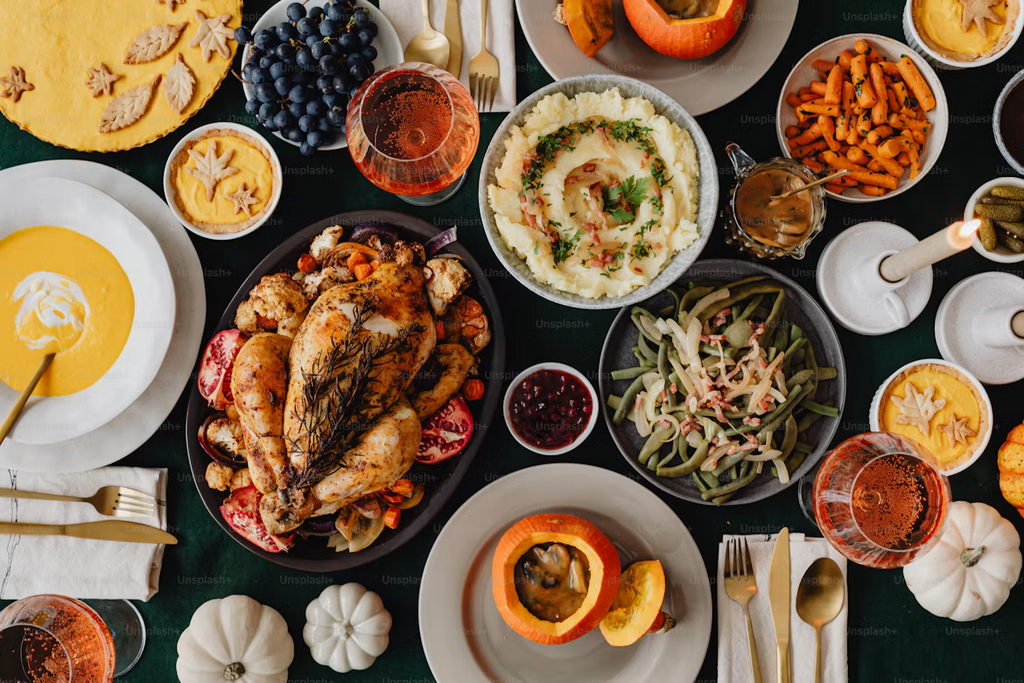
How to Plan a Balanced Thanksgiving Side-Dish Menu
You don’t need all ten dishes. For most gatherings, five to seven sides is plenty. Think in categories instead of counting recipes:
- Something creamy and comforting: mashed potatoes or mac and cheese.
- Something starchy to soak up gravy: stuffing, cornbread, or potatoes.
- Something sweet: sweet potato casserole, honey glazed carrots, or cranberry sauce.
- Something green or fresh-tasting: green bean casserole or Brussels sprouts.
- Something bright to cut the richness: cranberry sauce is the classic, and a squeeze of lemon on roasted vegetables helps too.
A few planning tips:
- Pick one or two rich, baked casseroles, not four. Casseroles compete for the same oven space and the same spot on the plate.
- Balance the oven. Choose a mix of stove top dishes (mashed potatoes, carrots, cranberry sauce) and oven dishes so you aren’t juggling everything at once.
- Include at least one vegetable that isn’t smothered in sauce. Roasted Brussels sprouts or squash gives guests something lighter.
- Keep your guests in mind. If someone is vegetarian, use vegetable broth in the stuffing and green bean casserole. Most of the other dishes here are already vegetarian.
- Start with the dishes people expect. Mashed potatoes, stuffing, and cranberry sauce are the ones most tables are missed for. Add the rest around them.
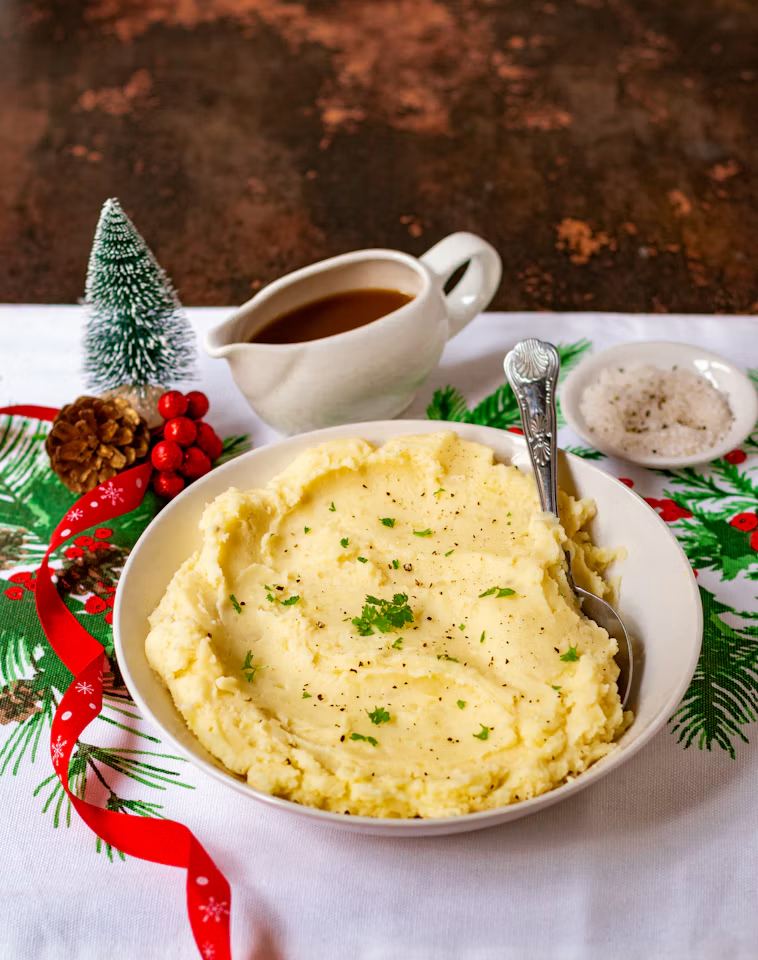
1. Creamy Garlic Mashed Potatoes
Smooth, buttery, and gently garlicky, these are the potatoes that pool perfectly under a spoonful of gravy. Yukon Gold potatoes give a naturally creamy texture without much effort.
Prep time: 15 minutes | Cook time: 25 minutes | Serves: 8
Ingredients
- 3 pounds Yukon Gold potatoes, peeled and cut into 1½-inch chunks
- 1 tablespoon salt, for the cooking water
- 6 tablespoons (¾ stick) unsalted butter
- 4 cloves garlic, minced
- ¾ cup whole milk, warmed
- ½ cup sour cream (or 4 ounces softened cream cheese)
- ¾ to 1 teaspoon salt, to taste
- ¼ teaspoon black pepper
Instructions
- Place the potatoes in a large pot and cover with cold water by about 1 inch. Add the tablespoon of salt.
- Bring to a boil over high heat, then reduce to a steady gentle boil. Cook 15 to 20 minutes, until a fork slides into the potatoes with no resistance.
- While the potatoes cook, melt the butter in a small saucepan over low heat. Add the garlic and cook 1 to 2 minutes, just until fragrant. Don’t let it brown.
- Drain the potatoes well, then return them to the hot, empty pot for 1 minute so any leftover moisture steams off.
- Mash with a potato masher (or pass through a ricer) until mostly smooth.
- Stir in the garlic butter, warm milk, and sour cream. Season with salt and pepper, tasting as you go.
Tips and substitutions
- Start the potatoes in cold water so they cook evenly.
- Skip the food processor or blender. Overworking potatoes can turn them gluey.
- Warm milk blends in more smoothly than cold.
- For a dairy-free version, use olive oil or plant-based butter and unsweetened plant milk.
- Prefer a rustic texture? Leave the skins on and mash a little less.
Make ahead and storage
- Make the potatoes up to a day ahead. Refrigerate in a covered baking dish, then reheat covered in a 350°F oven for about 30 minutes, or on the stove top over low heat with a splash of milk.
- On the day, keep them warm in a slow cooker on the low setting for up to 2 hours, stirring occasionally.
- Refrigerate leftovers in an airtight container for 3 to 4 days.
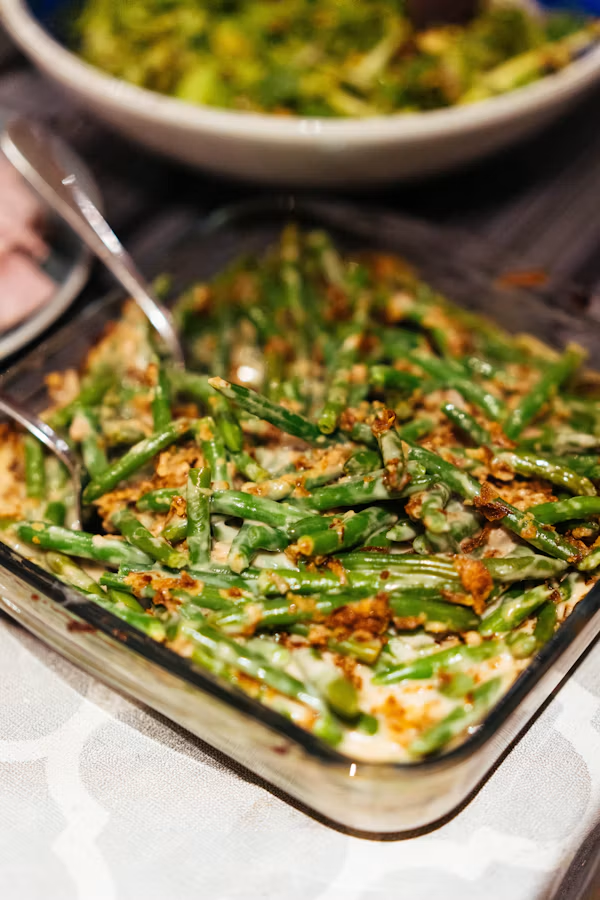
2. Green Bean Casserole
The cozy classic: tender green beans in a creamy mushroom sauce, topped with crispy fried onions. This version makes the sauce from scratch, which takes only a few extra minutes and tastes noticeably fresher than a can.
Prep time: 20 minutes | Cook time: 35 minutes | Serves: 8
Ingredients
- 1½ pounds fresh green beans, trimmed and cut into 1½-inch pieces (or two 12-ounce bags frozen cut green beans)
- 1 teaspoon salt, for the blanching water
- 3 tablespoons unsalted butter
- 8 ounces cremini or white mushrooms, sliced
- 2 cloves garlic, minced
- 3 tablespoons all-purpose flour
- 1 cup chicken or vegetable broth
- ½ cup heavy cream (or whole milk)
- ½ teaspoon salt
- ¼ teaspoon black pepper
- 1½ cups crispy fried onions, divided
Instructions
- Heat the oven to 350°F. Lightly grease a 2-quart baking dish.
- Bring a large pot of water to a boil and add the 1 teaspoon salt. Add fresh green beans and cook 4 to 5 minutes until bright green and just tender-crisp. Drain and rinse under cold water to stop the cooking. (If using frozen beans, thaw and skip this step.)
- In a large skillet, melt the butter over medium heat. Add the mushrooms and cook 6 to 8 minutes, until they release their liquid and it cooks off. Add the garlic and cook 30 seconds.
- Sprinkle the flour over the mushrooms and stir for 1 minute.
- Slowly pour in the broth while stirring, then the cream. Simmer 3 to 4 minutes until thickened. Stir in the salt and pepper.
- Fold in the green beans and ½ cup of the fried onions. Spoon into the baking dish.
- Bake uncovered for 20 minutes. Scatter the remaining 1 cup of onions on top and bake another 5 to 8 minutes, until the sauce bubbles around the edges.
Tips and substitutions
- Cook the mushrooms until the pan is nearly dry. That’s where the deep flavor comes from.
- Don’t overcook the beans in the blanching step. They’ll keep softening in the oven.
- Short on time? Use a can of cream of mushroom soup in place of the homemade sauce. It’s the traditional shortcut.
- For a lighter topping, use toasted breadcrumbs or sliced almonds.
Make ahead and storage
- Assemble the casserole through step 6 up to a day ahead. Cover and refrigerate, and hold back the final onion topping until baking. Add 5 to 10 minutes to the first bake time since it’s starting cold.
- Refrigerate leftovers for 3 to 4 days. The topping will soften but the flavor holds.
3. Classic Homemade Stuffing
Herby, buttery, and golden on top with soft, savory middles. This is a bread-based stuffing with sage and thyme, baked in a dish so you get plenty of crisp edges. It’s called dressing in some families, and both names are correct.
Prep time: 30 minutes | Cook time: 50 minutes | Serves: 10
Ingredients
- 1 pound sturdy white bread or country-style loaf, cut into ¾-inch cubes (about 14 cups)
- ½ cup (1 stick) unsalted butter
- 2 cups diced yellow onion (about 1 large)
- 1½ cups diced celery (about 3 stalks)
- 3 cloves garlic, minced
- 1½ tablespoons chopped fresh sage (or 1½ teaspoons dried rubbed sage)
- 1 tablespoon fresh thyme leaves (or 1 teaspoon dried)
- 1 tablespoon chopped fresh parsley
- 1 teaspoon salt
- ½ teaspoon black pepper
- 2½ cups chicken or vegetable broth, warmed
- 2 large eggs, beaten
Instructions
- Dry the bread. Spread the cubes on two baking sheets and bake at 275°F for 30 to 40 minutes, stirring once, until dry and lightly crisp. (Leave the bread out overnight instead if you have time.) Transfer to a very large bowl.
- Raise the oven temperature to 375°F. Grease a 9×13-inch baking dish.
- Melt the butter in a large skillet over medium heat. Add the onion and celery and cook 8 to 10 minutes, until soft and translucent. Add the garlic and herbs and cook 1 minute.
- Scrape the vegetables and butter over the bread. Add salt and pepper and toss.
- Whisk the eggs into the warm broth, pour over the bread, and gently fold until evenly moistened. Let it sit 5 minutes so the bread absorbs the liquid.
- Transfer to the baking dish. Cover with foil and bake 25 minutes.
- Remove the foil and bake another 20 to 25 minutes, until golden on top and set in the middle.
Tips and substitutions
- Dry bread is the key. Fresh bread turns mushy because it can’t absorb the broth.
- If the mixture looks dry after folding, add broth ¼ cup at a time. It should be moist, not soupy.
- Add-ins to try: 8 ounces browned sausage, 1 cup sautéed mushrooms, or 1 diced apple cooked with the onions.
- Bake it in a dish instead of inside the turkey. It’s easier to time, and it avoids food-safety concerns, since stuffing cooked inside a bird must reach 165°F.
Make ahead and storage
- Assemble the stuffing through step 5 a day ahead, cover, and refrigerate. Bake as directed, adding about 10 minutes to the covered stage.
- Refrigerate leftovers for 3 to 4 days. Reheat with a splash of broth to bring back the moisture.
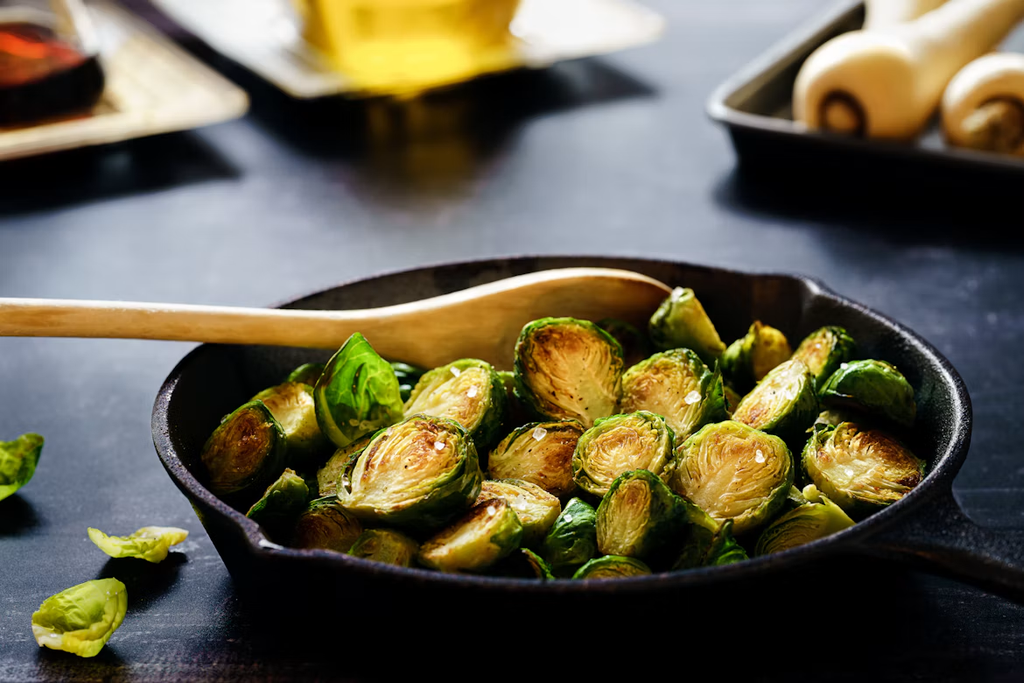
4. Roasted Brussels Sprouts with Parmesan
Crisp-edged, caramelized, and salty-nutty from Parmesan. Roasting at high heat is what turns Brussels sprouts from bitter to deeply savory, even for people who swear they don’t like them.
Prep time: 10 minutes | Cook time: 25 minutes | Serves: 6
Ingredients
- 1½ pounds Brussels sprouts, trimmed and halved (quartered if large)
- 3 tablespoons olive oil
- ¾ teaspoon salt
- ½ teaspoon black pepper
- ⅓ cup freshly grated Parmesan
- 1 tablespoon lemon juice (optional)
Instructions
- Heat the oven to 425°F. Place a large rimmed baking sheet in the oven while it heats.
- Toss the sprouts with the olive oil, salt, and pepper in a large bowl.
- Carefully spread them on the hot baking sheet, cut side down, in a single layer.
- Roast 20 to 25 minutes, until the cut sides are deeply golden and the outer leaves are crisp.
- Sprinkle with Parmesan and roast 2 to 3 more minutes, until melted.
- Toss with lemon juice if using, and serve right away.
Tips and substitutions
- Crowding the pan makes them steam instead of roast. Use two pans if needed.
- Pat the sprouts dry after washing so they brown.
- Add crumbled cooked bacon, toasted pecans, or dried cranberries for extra flavor.
- For a vegan version, swap the Parmesan for 2 tablespoons nutritional yeast.
Make ahead and storage
- Trim and halve the sprouts up to a day ahead and store them in a sealed container in the fridge. Roast them on the day, since they’re best fresh from the oven.
- Refrigerate leftovers for 3 to 4 days and reheat in a hot oven or skillet to bring back some crispness.
5. Sweet Potato Casserole
Soft, spiced sweet potatoes under a crunchy brown sugar pecan topping. It sits somewhere between a side dish and a dessert, which is exactly why people love it. A marshmallow option is below for those who grew up on it.
Prep time: 20 minutes | Cook time: 1 hour 20 minutes (including roasting the potatoes) | Serves: 10
Ingredients
For the filling
- 3 pounds sweet potatoes (about 4 large)
- 4 tablespoons unsalted butter, melted
- ⅓ cup packed light or dark brown sugar
- ½ cup whole milk
- 2 large eggs
- 1 teaspoon vanilla extract
- 1 teaspoon ground cinnamon
- ½ teaspoon salt
For the pecan topping
- ¾ cup chopped pecans
- ½ cup packed brown sugar
- ⅓ cup all-purpose flour
- ¼ cup (4 tablespoons) cold unsalted butter, cut into small pieces
- Pinch of salt
Instructions
- Heat the oven to 400°F. Prick the sweet potatoes several times with a fork, place on a foil-lined baking sheet, and roast 50 to 60 minutes, until very soft.
- Reduce the oven to 350°F. Grease a 9×13-inch baking dish.
- When the potatoes are cool enough to handle, peel off the skins and mash the flesh in a large bowl until smooth.
- Stir in the melted butter, brown sugar, milk, eggs, vanilla, cinnamon, and salt. Spread in the baking dish.
- In a separate bowl, mix the pecans, brown sugar, flour, and salt. Cut in the cold butter with your fingers or a fork until crumbly. Sprinkle over the potatoes.
- Bake 30 minutes, until the topping is golden and the center is set.
Tips and substitutions
- Roasting gives deeper flavor than boiling. If you’re short on time, peel, cube, and boil the potatoes for about 20 minutes, then drain well so the filling isn’t watery.
- For a marshmallow topping, skip the pecan topping and scatter 2 cups mini marshmallows over the casserole for the last 5 to 10 minutes of baking, watching closely.
- Add a pinch of nutmeg or a tablespoon of orange zest for extra warmth.
- No pecans? Walnuts work well, or use rolled oats in the topping instead.
Make ahead and storage
- Roast and mash the potatoes, and mix the filling, up to 2 days ahead. Refrigerate covered. Make the topping separately and store it in the fridge. Assemble and bake on the day, adding 10 to 15 minutes since the filling starts cold.
- Refrigerate leftovers for 3 to 4 days.
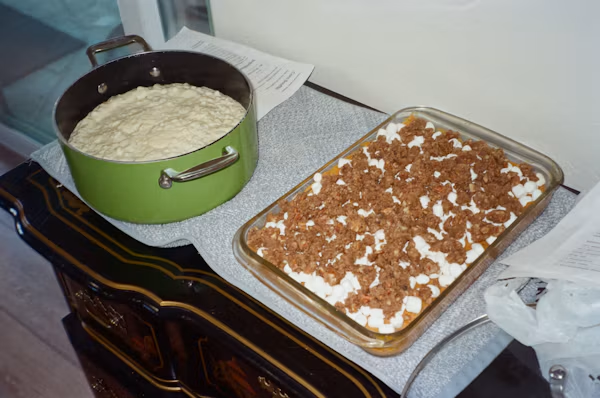
6. Honey Glazed Carrots
Sweet, shiny carrots with a buttery honey glaze. They come together in one skillet in under half an hour, which makes them a gift when your oven is already full.
Prep time: 10 minutes | Cook time: 20 minutes | Serves: 6
Ingredients
- 2 pounds carrots, peeled and sliced ½ inch thick on the diagonal
- 3 tablespoons unsalted butter
- ½ cup water
- ½ teaspoon salt
- ¼ cup honey
- ¼ teaspoon black pepper
- 1 teaspoon lemon juice
- 1 tablespoon chopped fresh parsley, for serving
Instructions
- Place the carrots, butter, water, and salt in a large, wide skillet. Cover and bring to a simmer over medium heat.
- Cook, covered, 8 to 10 minutes, until the carrots are just barely tender when pierced with a fork.
- Uncover, add the honey, and increase the heat to medium-high. Cook 5 to 7 minutes, stirring often, until the liquid reduces to a glossy glaze that coats the carrots.
- Stir in the pepper and lemon juice. Taste and add a pinch more salt if needed.
- Transfer to a serving dish and sprinkle with parsley.
Tips and substitutions
- Cut the carrots roughly the same thickness so they cook evenly.
- Keep an eye on the glaze at the end. Honey can darken quickly once the water has cooked off.
- Swap the honey for maple syrup, or use vegan butter or olive oil to make it dairy-free.
- Rainbow carrots look beautiful, though the colors may bleed a little.
- Honey shouldn’t be given to babies under 1 year old, so use maple syrup if one is at your table.
Make ahead and storage
- Cook the carrots through step 2 a day ahead and refrigerate. Finish the glaze just before serving, which takes about 5 minutes.
- Refrigerate leftovers for 3 to 4 days and reheat gently in a skillet or microwave.
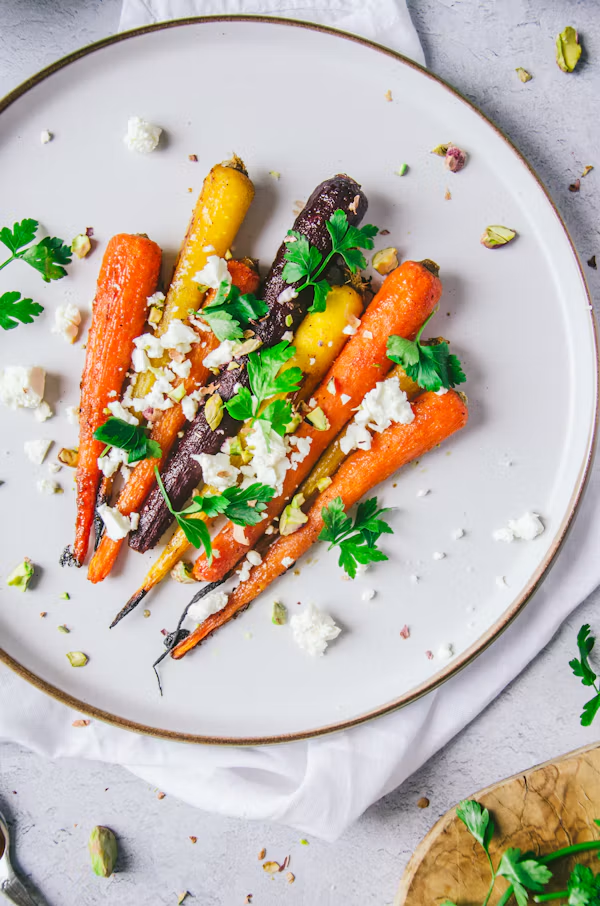
7. Classic Cranberry Sauce
Tart, sweet, and ruby red, with a little orange for brightness. Homemade cranberry sauce takes about 15 minutes, uses just a few ingredients, and tastes far fresher than anything from a can.
Prep time: 5 minutes | Cook time: 15 minutes | Serves: 8 to 10 (makes about 2 cups)
Ingredients
- 12 ounces fresh or frozen cranberries (one standard bag)
- ¾ cup granulated sugar
- ½ cup orange juice
- ¼ cup water
- 1 strip orange zest (about 2 inches, removed with a vegetable peeler)
- ¼ teaspoon salt
Instructions
- Rinse the cranberries and pick out any soft or shriveled ones.
- Combine the sugar, orange juice, water, orange zest, and salt in a medium saucepan. Bring to a boil over medium-high heat, stirring until the sugar dissolves.
- Add the cranberries and return to a boil. Reduce the heat to medium-low and simmer 10 to 12 minutes, stirring occasionally, until most of the berries have popped.
- Remove the zest strip. Press a few berries against the side of the pot if you’d like a thicker sauce.
- Let cool completely. The sauce will thicken as it cools, so don’t judge the texture while it’s hot.
Tips and substitutions
- Frozen cranberries work just as well. No need to thaw them first.
- Taste once it has cooled. If it’s too tart, stir in a tablespoon or two more sugar while the sauce is still warm.
- Swap the sugar for maple syrup or honey, using a little less (about ½ cup) and tasting as you go.
- Fun add-ins: a cinnamon stick, a pinch of ground ginger, chopped pecans, or a splash of orange liqueur.
Make ahead and storage
- This is the easiest side to make early. Refrigerate in a covered jar for up to 1 week, and serve chilled or at room temperature.
- It also freezes well in an airtight container for up to 2 months. Thaw in the fridge overnight.
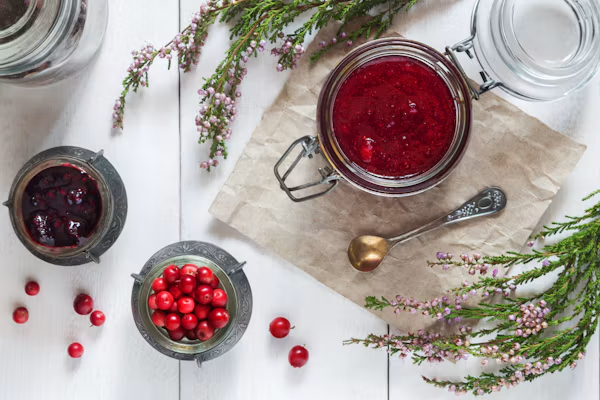
8. Creamy Baked Mac and Cheese
A silky cheese sauce, tender macaroni, and a buttery, crunchy topping. This is the dish that tends to disappear first, so plan accordingly. The sauce is a classic white sauce (a roux and milk) with plenty of cheese stirred in, which is easier than it sounds.
Prep time: 20 minutes | Cook time: 40 minutes | Serves: 10
Ingredients
For the pasta and sauce
- 1 pound elbow macaroni
- 5 tablespoons unsalted butter
- ⅓ cup all-purpose flour
- 2½ cups whole milk, warmed
- 1 cup half-and-half, warmed
- 3 cups (12 ounces) freshly grated sharp cheddar
- 1½ cups (6 ounces) freshly grated Gruyère or Monterey Jack
- 1 teaspoon salt
- ½ teaspoon black pepper
- ½ teaspoon mustard powder
- Pinch of ground nutmeg (optional)
For the topping
- 1 cup panko breadcrumbs
- 2 tablespoons unsalted butter, melted
- ¼ cup grated Parmesan
Instructions
- Heat the oven to 350°F. Grease a 9×13-inch baking dish.
- Cook the macaroni in well-salted boiling water for 2 minutes less than the package directions, since it will finish cooking in the oven. Drain and set aside.
- In the same pot, melt the 5 tablespoons butter over medium heat. Whisk in the flour and cook 1 minute, whisking constantly.
- Slowly pour in the warm milk and half-and-half, whisking the whole time to prevent lumps. Cook 5 to 7 minutes, stirring often, until the sauce thickens enough to coat the back of a spoon.
- Remove from the heat. Stir in the salt, pepper, mustard powder, and nutmeg, then add the cheeses a handful at a time, stirring until smooth.
- Fold the macaroni into the sauce and pour into the baking dish.
- Mix the panko, melted butter, and Parmesan and scatter evenly over the top.
- Bake uncovered 25 to 30 minutes, until bubbling at the edges and golden on top. Let it rest 5 to 10 minutes before serving so the sauce can settle.
Tips and substitutions
- Grate the cheese yourself. Pre-shredded cheese often contains anti-caking agents that can make the sauce slightly grainy.
- Take the pot off the heat before adding the cheese. Cheese added to a boiling sauce can turn greasy.
- Other good melting cheeses: Colby, fontina, or Gouda. Keep at least half of it a sharp cheddar for flavor.
- Not a fan of panko? Crushed butter crackers make a good topping.
- For extra kick, add ¼ teaspoon smoked paprika or cayenne to the sauce.
Make ahead and storage
- Assemble the mac and cheese (with the topping) up to a day ahead, cover tightly, and refrigerate. Bake straight from the fridge, adding 10 to 15 minutes.
- The macaroni absorbs sauce as it sits, so if making it ahead, stir in an extra ¼ cup of milk before baking.
- Refrigerate leftovers for 3 to 4 days and reheat with a splash of milk.
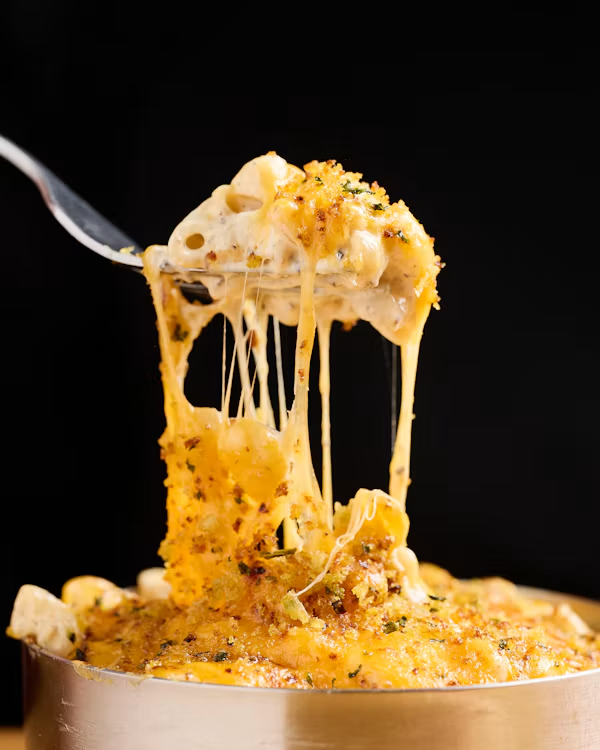
9. Southern Cornbread
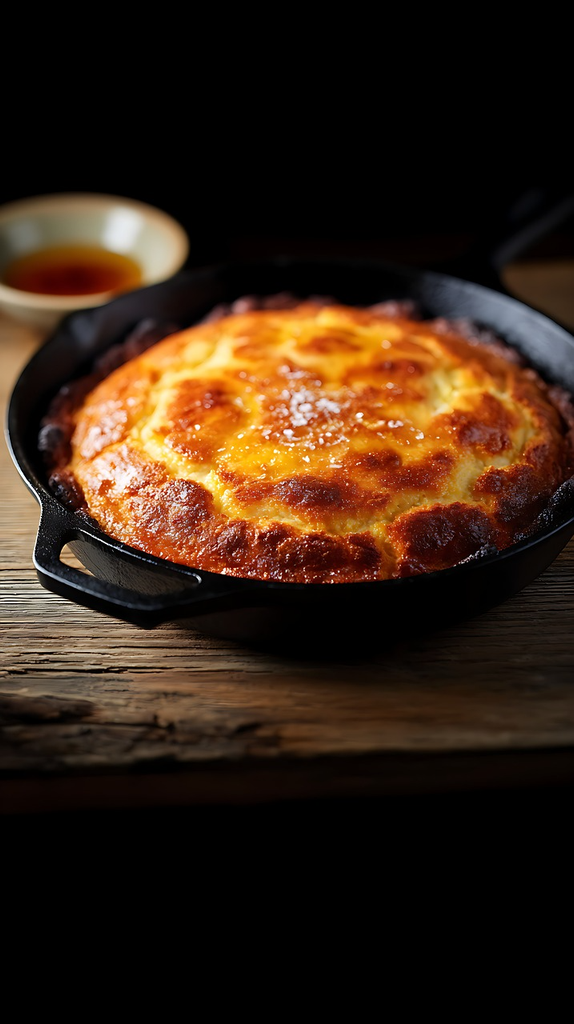
Traditional Southern cornbread is savory, not sweet, with a crisp, golden crust from a hot cast-iron skillet and a tender, slightly tangy crumb from buttermilk. It’s wonderful with butter, alongside greens, or crumbled into stuffing.
Prep time: 10 minutes | Cook time: 22 minutes | Serves: 8
Ingredients
- 3 tablespoons bacon drippings, vegetable oil, or butter, for the skillet
- 1½ cups yellow or white cornmeal (fine or medium grind)
- ½ cup all-purpose flour
- 2 teaspoons baking powder
- ½ teaspoon baking soda
- ¾ teaspoon salt
- 1½ cups buttermilk
- 2 large eggs
- 3 tablespoons unsalted butter, melted and slightly cooled
Instructions
- Place a 10-inch cast-iron skillet in the oven and heat to 425°F. Let the skillet heat for at least 5 to 10 minutes.
- In a large bowl, whisk together the cornmeal, flour, baking powder, baking soda, and salt.
- In a separate bowl, whisk the buttermilk and eggs, then whisk in the melted butter.
- Pour the wet ingredients into the dry and stir just until combined. A few small lumps are fine.
- Carefully remove the hot skillet from the oven using oven mitts. Add the bacon drippings (or oil or butter) and swirl to coat the bottom and sides. It should sizzle.
- Pour the batter into the skillet. It should sizzle as it hits the pan.
- Bake 20 to 25 minutes, until the top is golden and a toothpick inserted in the center comes out clean.
- Let cool 5 minutes before slicing into wedges.
Tips and substitutions
- A preheated skillet is what creates the crisp crust. Don’t skip it.
- Don’t overmix, or the cornbread can turn tough.
- No buttermilk? Stir 1½ tablespoons lemon juice or white vinegar into 1½ cups milk and let it sit 5 minutes.
- No cast-iron skillet? Use a 9-inch metal baking pan, preheated the same way, and check for doneness a few minutes earlier.
- If your family prefers sweeter cornbread, add 1 to 2 tablespoons sugar to the dry ingredients.
- Add-ins: ½ cup shredded cheddar, 1 to 2 chopped jalapeños, or ½ cup corn kernels.
Make ahead and storage
- Bake it a day ahead, cool completely, and wrap tightly. Rewarm, covered with foil, in a 300°F oven for 10 to 15 minutes.
- Store at room temperature for a day, or refrigerate for 3 to 4 days.
- Day-old cornbread is great for cornbread stuffing. Cube and dry it as you would bread.
10. Roasted Butternut Squash with Herbs
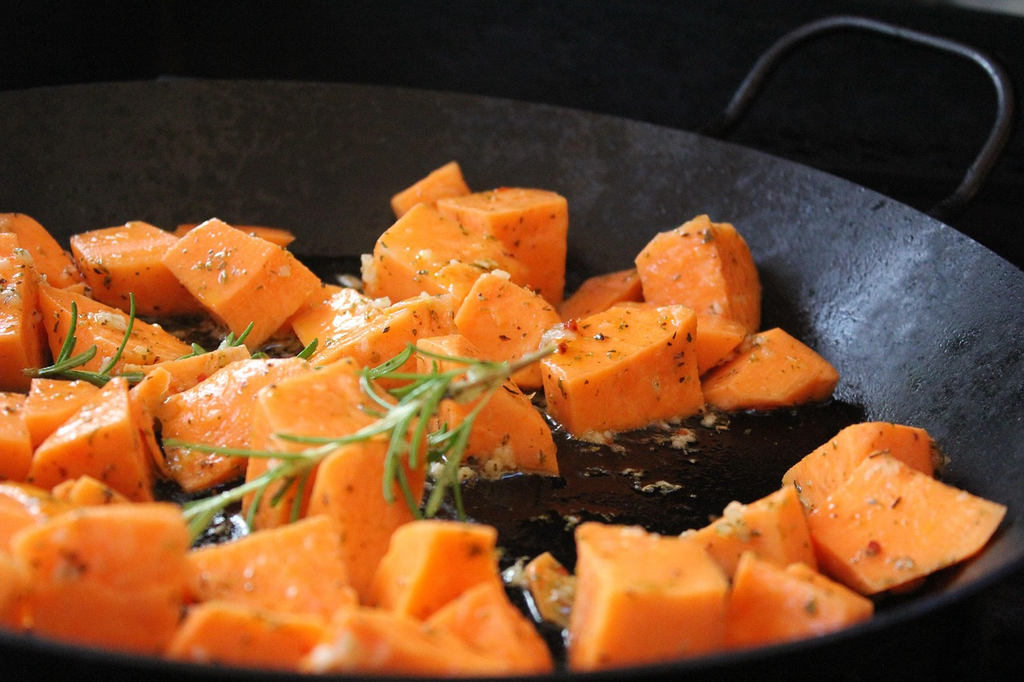
Sweet, caramelized squash with a savory herb coating. It’s easy, colorful, naturally gluten-free and vegan, and a good choice when you want a vegetable that isn’t covered in sauce.
Prep time: 15 minutes | Cook time: 35 minutes | Serves: 6
Ingredients
- 1 large butternut squash (about 3 pounds), peeled, seeded, and cut into 1-inch cubes (about 6 cups)
- 3 tablespoons olive oil
- ¾ teaspoon salt
- ½ teaspoon black pepper
- 1 tablespoon fresh thyme leaves (or 1 teaspoon dried)
- 1 tablespoon finely chopped fresh sage (or 1 teaspoon dried)
- 2 cloves garlic, minced
- 1 tablespoon maple syrup (optional)
- 2 tablespoons chopped fresh parsley, for serving
Instructions
- Heat the oven to 425°F. Line a large rimmed baking sheet with parchment paper.
- In a large bowl, toss the squash with the olive oil, salt, pepper, thyme, and sage until evenly coated.
- Spread on the baking sheet in a single layer, leaving a little space between pieces.
- Roast 20 minutes, then flip the pieces and stir in the garlic (and maple syrup, if using).
- Roast another 10 to 15 minutes, until the squash is fork-tender with browned edges.
- Transfer to a serving dish and sprinkle with parsley.
Tips and substitutions
- Peeling is the hardest part. To make it easier, pierce the whole squash a few times with a fork and microwave it for 2 to 3 minutes to soften the skin slightly. Let it cool before cutting.
- Short on time? Buy pre-cut squash cubes.
- Add the garlic partway through so it doesn’t burn.
- Finish with toasted pecans, pumpkin seeds, or a sprinkle of feta or Parmesan.
- No fresh herbs? Dried work, but use about one-third as much.
Make ahead and storage
- Peel and cube the squash up to 2 days ahead and refrigerate in a sealed container. Roast on the day for the best texture.
- Refrigerate leftovers for 3 to 4 days. They’re good reheated in the oven or tossed into salads and grain bowls.
Which Dishes Can Be Made a Day Ahead?
Making a few dishes early frees up the oven and your attention on Thanksgiving Day. Here’s how each recipe fits into a make-ahead plan:
| Dish | How far ahead | What to do the day of |
|---|---|---|
| Cranberry sauce | Up to 1 week | Take out of the fridge about 30 minutes before serving |
| Mashed potatoes | 1 day | Reheat covered in the oven or on the stovetop with a splash of milk |
| Green bean casserole | 1 day (unbaked) | Add the onion topping and bake |
| Stuffing | 1 day (unbaked) | Bake as directed, adding about 10 minutes |
| Sweet potato casserole | 2 days (filling), topping separate | Top and bake |
| Mac and cheese | 1 day (unbaked) | Bake, adding 10 to 15 minutes |
| Cornbread | 1 day | Rewarm in a 300°F oven, covered |
| Honey glazed carrots | 1 day (partly cooked) | Finish the glaze on the stovetop |
| Butternut squash | 2 days (prep only) | Roast fresh |
| Brussels sprouts | 1 day (prep only) | Roast fresh |
Best made fresh: the roasted vegetables (Brussels sprouts and squash) and cornbread taste best close to serving time, though squash and cornbread both hold up well if you plan ahead.
Tips for Serving Multiple Side Dishes Together
Getting several dishes to the table hot is mostly about scheduling. A few ideas that help:
- Write out an oven plan. The recipes here use a few temperatures: 350°F (mac and cheese, green bean casserole, sweet potato casserole), 375°F (stuffing), and 425°F (Brussels sprouts, butternut squash, cornbread). Dishes at 350°F can share the oven, and 425°F dishes can go in once the turkey comes out to rest.
- Use the turkey’s resting time. A turkey needs to rest before carving, which is a good window to bake dishes and finish stove top sides.
- Use every heat source. Mashed potatoes in a slow cooker, carrots on the stove top, and cranberry sauce already chilled in the fridge take pressure off the oven.
- Reheat gently. Cover casseroles with foil to prevent drying, and add a splash of milk or broth to mashed potatoes, mac and cheese, or stuffing.
- Serve in the right-size dishes. Smaller bowls that you refill look better than huge half-empty ones, and they keep food warmer. Warm your serving dishes in a low oven or with hot water if you can.
- Label dishes if guests have dietary needs. A small card for vegetarian, gluten-free, or nut-free dishes saves a lot of questions at the buffet.
- Set out serving spoons for every dish. It sounds obvious, but it’s the thing most hosts forget.
- Let people serve themselves. Family-style or buffet service keeps you out of the kitchen and at the table.
Frequently Asked Questions
How many side dishes should I make for Thanksgiving? For most gatherings, five to seven sides is plenty. Choose a mix of textures and flavors instead of making everything on the list.
Which sides are the easiest for beginners? Cranberry sauce, honey glazed carrots, and roasted Brussels sprouts or squash are the simplest. They need basic skills and little equipment.
Can I freeze any of these dishes? Cranberry sauce freezes well for up to 2 months. Cornbread, baked sweet potato casserole, and unbaked stuffing can generally be frozen too, but the texture of mashed potatoes, mac and cheese, and green beans can change after freezing, so fresh is better for those.
How do I keep sides warm until dinner? Use a slow cooker on low for mashed potatoes, a low oven (around 200°F) with foil-covered dishes, or insulated carriers. Stir and check occasionally so nothing dries out.
How do I reheat leftovers? Reheat to steaming hot, and add a splash of milk or broth to creamy and starchy dishes. Refrigerate leftovers within 2 hours of serving, and eat them within 3 to 4 days.
What can I substitute for guests who are vegetarian or dairy-free? Use vegetable broth in the stuffing and green bean casserole. Swap butter for plant-based butter and milk for unsweetened plant milk in the mashed potatoes, carrots, and stuffing. The roasted vegetables and cranberry sauce are already easy to adapt.
How do I make my side dishes less rich? Balance heavier casseroles with something fresh or acidic, such as the lemon on the Brussels sprouts, the orange in the cranberry sauce, or a simple green salad on the side.
What if my casserole looks dry or too wet? For dry stuffing or mac and cheese, drizzle in a little warm broth or milk before baking. For a watery casserole, bake a few minutes longer uncovered so the extra liquid cooks off.
Final Thoughts
A good Thanksgiving spread doesn’t need to be complicated. Pick a handful of dishes you’ll enjoy making, prepare what you can ahead of time, and leave yourself room to sit down and enjoy the meal. Whichever sides end up on your table, happy cooking and happy Thanksgiving!